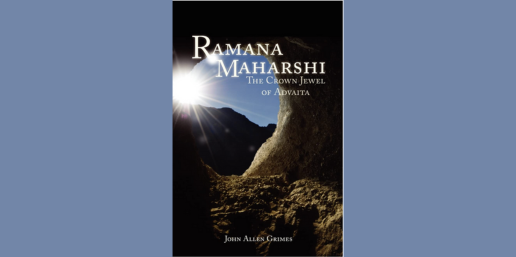
Ramana Maharshi, the Crown Jewel of Advaita by John Grimes
John Grimes is a famous author of many books like Vivekachudamani - Sankara's Crown Jewel of Discrimination, Ganapati - Song of the Self, Sankara and Heidegger - Being, Truth, Freedom, et al.
John is supposed to be an Advaita philosopher based on his writings. Though I cannot ascribe any such philosophical orientation (because of my limited understanding of John), his work on Ramana Maharshi certainly shows his immense grasp of Advaita philosophy.
John examines Ramana's life not only from philosophical constructs like Metaphysics and Epistemology but also from social constructs like Ethics, compassion, etc.
That he holds Ramana Maharshi in highest regard is seen from his introduction to the chapter on Metaphysics.
Ramana Maharshi has often been praised as one of the greatest embodiments of Advaita Vedanta, as great as the greatest of that illustrious group. Such a wonder the world seldom sees. An Advaitin's Advaitin if you will.
How did Ramana Maharshi get his name?
Among the descriptions of the event, it is the description by John that stands out!
The sage was named as VenkataRaman and was known as such till he came across a great scholar (Pundit) Ganapati Sastry, who himself was known as Ganapati Muni because of his severe penance.
On a day when the Sun was bearing down with great intensity, Ganapati Sastry went up the hill with great agitation to quench his spiritual thirst from the young VenkataRaman. In John's words…
Sastri quivered with emotion as he walked up to the Virupaksa cave (where Ramana was residing). Luckily for him the Swami (Ramana) was seated alone on the outer raised platform. Sastri fell flat on his face and held the Swami's feet with both hands and his voice trembled with emotion as he cried. "All that has to be read, I have read. Even Vedanta Sastra I have fully understood. I have performed Japa to my heart's content. Yet, I have not up to this time understood what Tapas is. Hence have I sought refuge at thy feet. Pray enlighten me about the nature of Tapas."
Ganapati Muni was elated with this teaching and he declared to his disciples that henceforth this young boy be called "Bhagawan Ramana Maharshi".
John brings out several nuggets of wisdom based on Ramana Maharshi's life and associating them with tools for our own spiritual practice while at the same time improving on our social life - including ethical living and compassion.
For those who may feel difficulty in understanding all the spiritual aspects, the initial chapters on Ramana Maharshi's life and on Advaita are sufficient enough reading to understand the Maharshi's life and his teachings!